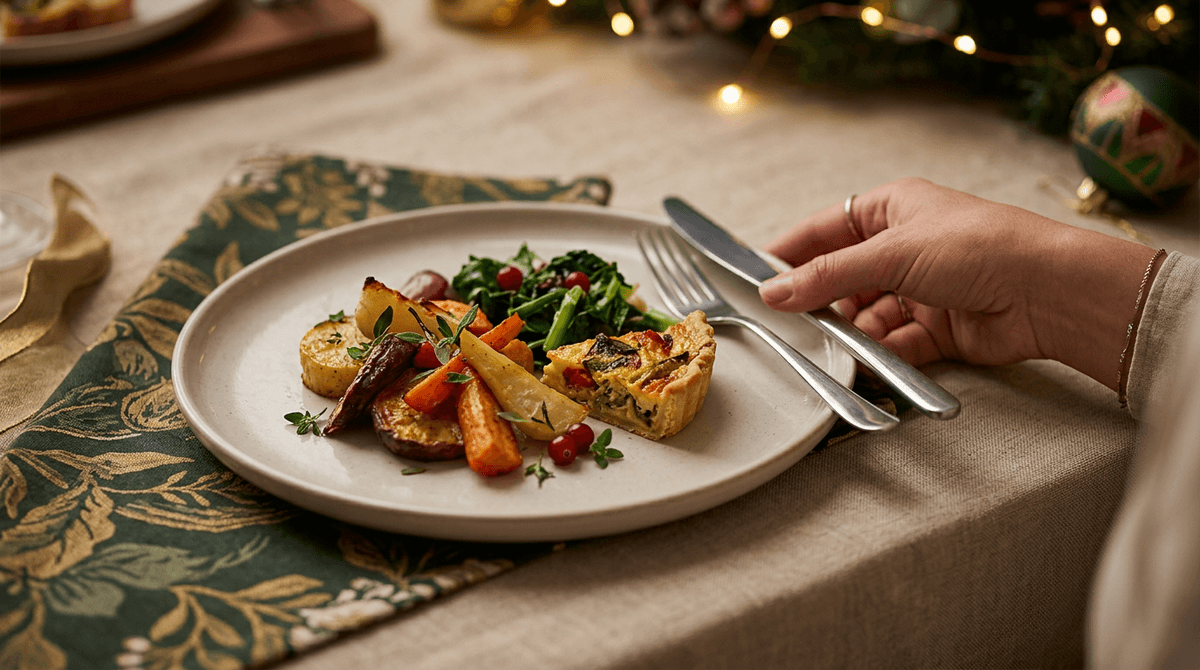
What Is Mindful Eating and Why It Matters During Holidays
Holiday meals often start with good intentions and end with that familiar moment: you stand up and realize you ate past comfort without really tasting half of it. The room is busy, the schedule is off, and food shows up in waves—apps, drinks, dinner, desserts—so it’s easy to keep eating just because it’s there.
Mindful eating is a simple skill: paying attention while you eat so your choices match what you actually want and what your body can handle. It matters most during holidays because distractions and “special occasion” thinking can drown out hunger and fullness signals. The goal isn’t to eat perfectly—it’s to notice sooner, adjust mid-meal, and avoid the regret that hits too late.
Why Overeating Happens More Easily During Holidays

That “too late” regret usually isn’t about willpower—it’s about conditions that make overeating the default. You sit down already a little hungry because lunch was rushed, then the first bites taste great, and conversation keeps you reaching for more before your body has time to register what’s happening.
Holidays stack several of these conditions at once. There’s more variety than usual, and “special” foods don’t show up every day, so it’s easy to sample everything. Alcohol and sweet drinks can lower the pause button and blur fullness, especially if you haven’t eaten much earlier. Add long gaps between meals, travel, and stress, and hunger can swing from “fine” to “starving” fast.
When plates are refilled and dessert is passed around, you often notice your limit only after you’ve crossed it—which is why recognizing what’s driving the urge matters before you try to change it.
Recognizing Hunger vs Emotional Eating Triggers
When dessert gets passed around, a common move is to say yes without checking in—because it feels like the moment calls for it. Then you’re eating while talking, and the “why” of the bite gets fuzzy. That’s the gap to watch: are you easing real hunger, or trying to change how you feel?
Physical hunger usually builds in a steady way. You can often point to a reason: it’s been hours since you ate, you feel low-energy, and most foods sound appealing, not just the “special” ones. Emotional eating tends to spike fast and aims at a specific fix—something sweet, crunchy, or comforting—especially after stress, awkward small talk, or a tense family moment.
If you’re at a 3 or below, consider a smaller portion or a slower start. The hard part is that feelings don’t wait; cravings can feel urgent even when your stomach is already catching up.
Practical Mindful Eating Techniques to Stay in Control
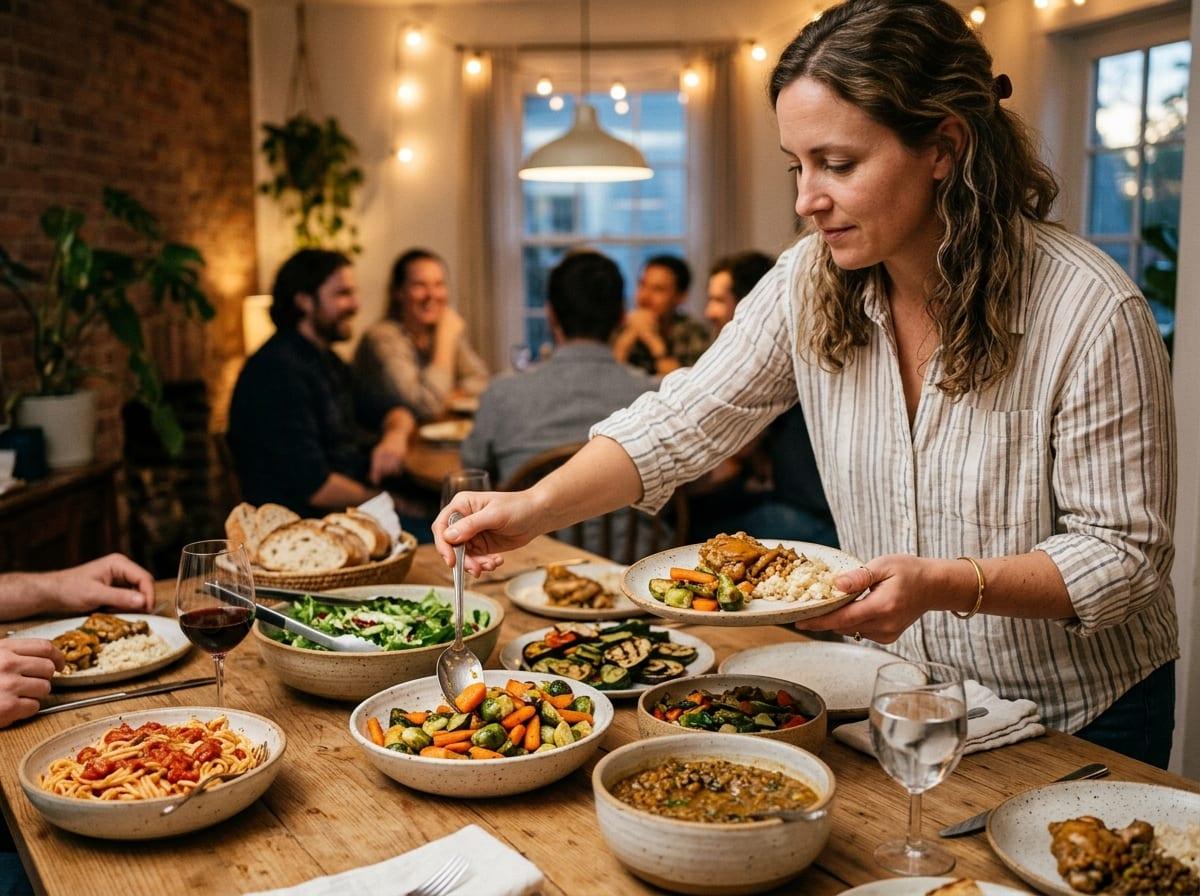
That urgency is exactly why simple “pause points” work better than big promises in the moment. Before you start, scan the options and pick two or three things you actually want, then serve them on one plate. If you’re still hungry after ten minutes, you can choose more—but you’ve already avoided the automatic sampling loop.
Once you’re eating, slow down without turning it into a performance. Put your fork down every few bites, sip water, and aim to finish your first serving at the same pace as the slowest eater at the table. Your stomach needs time to catch up. A practical downside: if you arrive very hungry, slowing down can feel irritating. Fix that earlier with a small snack—yogurt, nuts, or a sandwich—so dinner isn’t your first real fuel.
Mid-meal, do a quick “comfort check”: am I still enjoying this bite, and am I past a 6 or 7 on fullness? If yes, switch to conversation, tea, or a short walk, then decide about dessert on purpose.
How to Enjoy Holiday Foods Without Guilt or Restriction
Deciding about dessert on purpose often means giving yourself full permission to have it. When you label a food “bad” or tell yourself you “shouldn’t,” you usually eat it faster, then keep going because it already feels like a slip. A cleaner approach is to choose the dessert you actually care about, take a normal portion, and plan to sit down for it—plate, fork, no hovering at the counter.
To keep it enjoyable without turning rigid, use a simple rule: “best bites only.” Take a bite, notice if it’s still worth it, and stop when it turns into mindless chewing. If you want seconds, pause for a minute and ask, “Will this add enjoyment, or just volume?” The real-world difficulty is that family-style serving makes portions slippery; it’s easy to lose track when you’re “just grabbing a little more.” Putting your portion on a plate helps.
Managing Social and Cultural Pressures Around Food
When other people comment on what you’re eating, it can pull you back into autopilot fast. Someone offers seconds, a relative watches your plate, or a host insists you “have to try” their dish. In that moment, the easiest path is to comply, even if you’re already comfortable.
Have a few short lines ready so you don’t have to improvise: “It was great—I’m good for now,” “I’m pacing myself so I can enjoy dessert,” or “I’d love to take some home.” If cultural expectations make refusing feel rude, use a smaller “yes”: take a modest portion, eat slowly, and focus on the conversation. If you’re drinking, decide your limit early, because saying no gets harder after the second glass.
Building Sustainable Eating Habits Beyond the Holidays
When those boundaries start to feel like part of your normal routine, the holiday meal stops being a one-off challenge and becomes practice for the rest of the year. Pick one or two behaviors that worked—one-plate starts, a mid-meal comfort check, “best bites only”—and keep them in ordinary meals where the stakes are lower. A Tuesday dinner is a good place to notice what “comfortably satisfied” feels like without a crowd watching.
Make it easy to repeat. Keep a reliable afternoon snack on hand so you don’t arrive at dinner starving, and plan your next meal normally after a heavy one instead of “making up for it.” The hard part is consistency when life gets busy; if you try to change everything at once, you’ll drop it. Keep the smallest habit that pays off.