Noticing clicks, cracks, and pops in joints
It often shows up in the in-between moments: you stand after a long meeting and your knees make a soft click, or you roll your shoulders before a workout and there’s a quick pop that seems louder than it should be. The awkward part is how inconsistent it can feel—some days it happens repeatedly, other days not at all—even when your routine hasn’t changed.
Those sounds don’t all come from the same place. A single sharp crack after you’ve been still may happen when a joint briefly separates and pressure shifts inside the slippery joint fluid. A more repeatable pop that happens at the same point in a movement can be soft tissue (like a tendon) moving over a bony edge and “snapping” into a new position. And when the sound is more like grinding or crunching—especially with stiffness—it may reflect more friction between surfaces, which can feel more concerning even when it isn’t immediately painful.
What tends to change the soundtrack is what changes the mechanics: how warm the joint is, how long you’ve been in one position, and how tightly the surrounding tissues are pulling. That’s why a noise can feel new simply because you’re noticing it more, not necessarily because the joint suddenly became damaged.
Gas bubbles collapsing: the classic knuckle crack
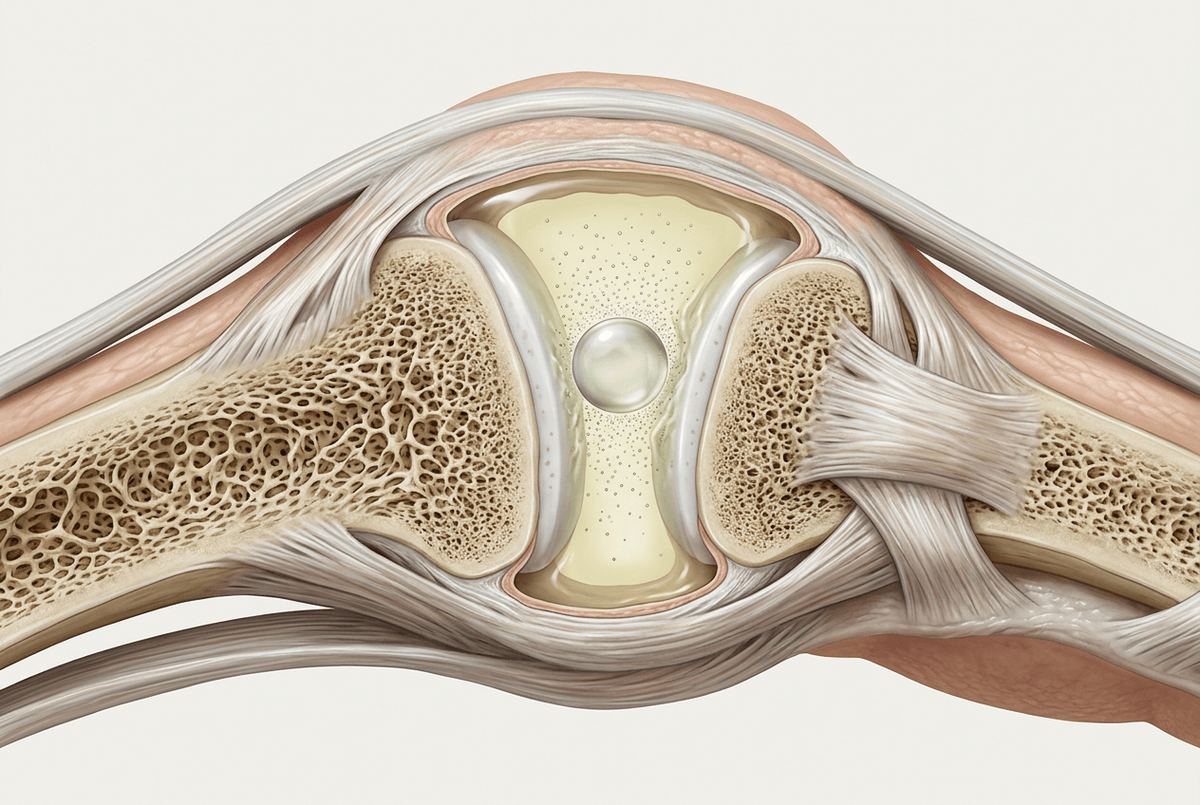
That familiar “one-and-done” crack often happens right when you pull a finger, twist your neck, or stretch a joint after it’s been still. It can feel oddly satisfying, but also a little suspicious—especially if the sound is louder than the movement seems to justify, or if you can’t make it happen again right away.
In many cases, the noise is tied to pressure changes inside the joint capsule. Synovial fluid normally helps surfaces glide with very low friction, and it also holds dissolved gases. When the joint surfaces separate quickly, pressure drops and a gas bubble can form (a process often called cavitation). The “crack” is linked to that rapid shift—either the bubble forming or changing shape—followed by a short period where the gas stays dispersed, which is why repeated cracks are inconsistent and may not be possible for several minutes.
This is also why it may show up more after rest: the joint is stiffer, the pull is more abrupt, and the pressure change is bigger. If the crack is painless and not followed by swelling, warmth, or loss of motion, it often fits this pressure-driven pattern rather than a surface-wear problem.
Tendons snapping over bone can mimic cracking
You might notice it most during a familiar motion: a knee that pops every time you squat past a certain depth, or a shoulder that clicks right as your arm crosses your body. It can feel oddly “mechanical,” and the repeatability is the part that throws people—especially when it keeps happening even after you’ve already “loosened up.”
In some cases, the sound isn’t coming from inside the joint fluid at all. A tendon can act like a cord under tension, tracking along a groove or sliding over a bony edge as you move. When the joint angle changes, that tendon may briefly catch due to tightness, swelling in nearby tissue, or a slightly altered line of pull—then release and snap into a new position. That quick shift can sound like a crack, but it often happens at the same point in the movement and can sometimes be felt as a small flick under the skin.
This is one reason “more popping” doesn’t automatically mean “more damage.” A small change in flexibility, fatigue, or how you’re holding a joint can make the tendon’s path less smooth for a while, even if the joint surfaces themselves haven’t changed.
Why rest, stiffness, and repetition change the sound
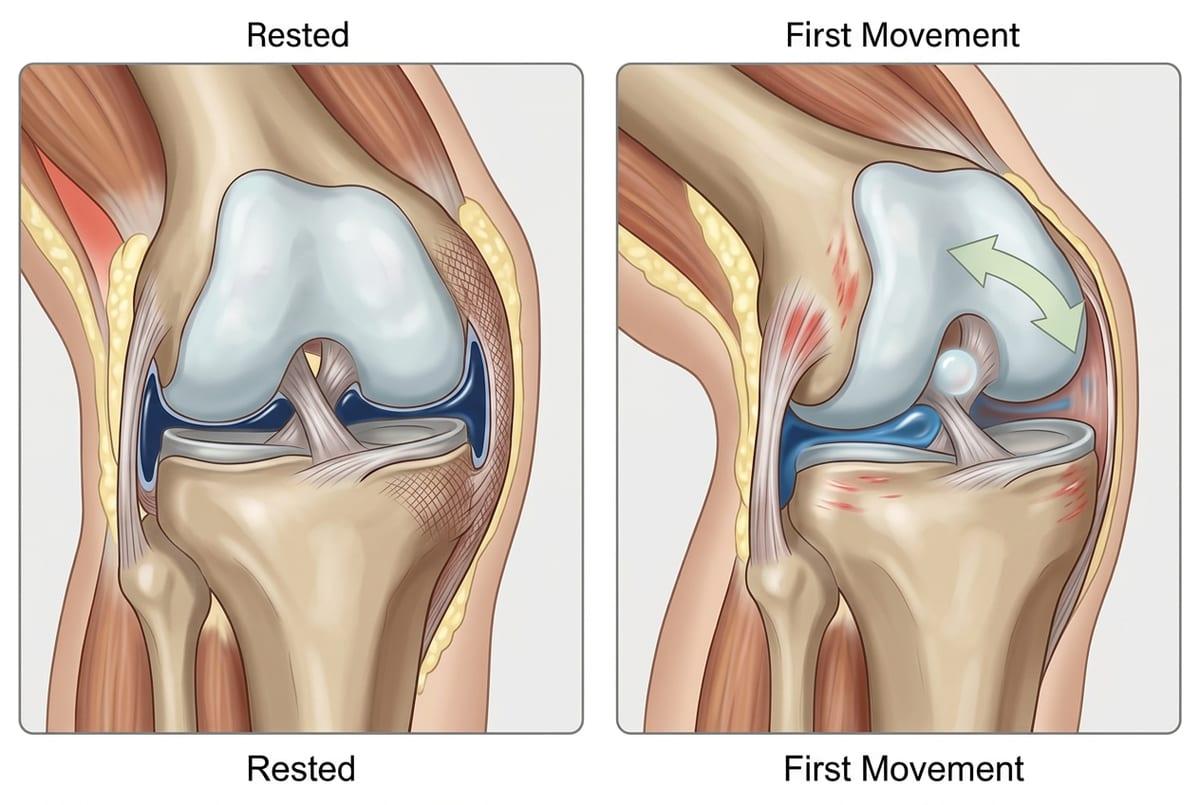
After you’ve been still, the first few movements can feel slightly “sticky”—and the sounds can seem sharper, even if nothing hurts. That can be confusing because it may look like the joint is suddenly worse, when it’s really the conditions around the joint that changed during rest.
With less motion, synovial fluid doesn’t circulate as much, and the capsule and nearby tissues may temporarily stiffen. The first stretch or stand-up can separate joint surfaces more abruptly, which makes a pressure shift more noticeable (and can set up that single crack). In contrast, a tendon that’s been resting under steady tension may need a few repetitions before it starts gliding smoothly again, so the pop can show up in the same spot until the movement pattern “settles.”
If you’re waiting for the noise, you may unconsciously move a little faster or a little farther, chasing the sensation—making the sound more likely, even when the joint itself hasn’t meaningfully changed.
Rougher cartilage surfaces create grinding, not popping
It can start as a faint crunch you only notice on stairs, or a dry, sandpapery feeling in the knee when you straighten it after sitting. Unlike a single crack that comes and goes, this kind of noise may show up as a longer “grind” through the movement, and it can feel inconsistent—quiet one day, louder the next—without a clear trigger.
That difference often comes down to friction. Cartilage and synovial fluid are meant to let joint surfaces glide with very little resistance. If the cartilage surface is a bit rougher, or if the fluid isn’t reducing friction as effectively in that moment, the surfaces can rub rather than separate and “pop.” The sound can land closer to crepitus—more like crunching or grating—because it’s produced by continuous contact instead of a quick pressure shift.
A grinding sound can feel like “bones scraping,” even when the joint is simply moving with less smoothness than usual. If the sensation starts coming with warmth, swelling, catching, or a shrinking range of motion, it’s a pattern that may be worth having evaluated.
When a reasonable stretch creates unexpected discomfort
It’s often the moment you lean into what should be an easy stretch and get a quick, sharp tug—like the joint is “objecting”—even though the movement wasn’t aggressive. The discomfort can feel out of proportion to the effort, and it may be inconsistent: fine on the second try, then oddly stingy again the next day.
One reason is that a stretch doesn’t just lengthen muscle. It also tensions the joint capsule and the connective tissue that guides the joint, and it can change how a tendon tracks over nearby bone. If a tendon is slightly swollen, fatigued, or being pulled at a new angle, it may momentarily bind and then shift, creating a pop that’s paired with a brief pinch. In some cases the nervous system adds to the intensity—when you’re braced for a noise, you may tighten around the joint, which increases compression and makes a normal end-range feel abruptly uncomfortable.
Discomfort that reliably shows up at the same point in the same motion can suggest a mechanical “catch,” while a one-off sting after being still can behave more like a tissue that simply wasn’t ready yet.
Signals that make joint noises worth evaluating
The shift people notice first is that the sound stops being a background detail and starts changing what they do. You avoid a depth in your squat because the knee pops and then feels “off,” or you move your neck more cautiously because the click now comes with a thin line of pain. That combination—noise plus a change in confidence or control—tends to be more meaningful than volume alone, even when you can’t fully explain what changed.
One pattern that stands out is a new noise after a specific injury or awkward event, especially if it comes with swelling, warmth, or lingering soreness. That can happen because irritated tissue inside or around the joint holds more fluid and becomes more sensitive, which changes how smoothly structures glide. Instead of a quick, pressure-driven crack, you may get repeated clicks as tendons and lining tissues meet more resistance, or a rougher, longer grind when surfaces don’t slide as cleanly in that moment.
Mechanical symptoms can also be a reason to pause: catching, locking, a giving-way feeling, or a steadily shrinking range of motion. If any of those show up, or the noise is steadily becoming more frequent along with pain, it may be worth having someone evaluate it rather than assuming it’s “just cracking.”