When “it appreciates” is the whole plan
The pitch is usually one sentence: buy it, wait, sell for more. That works only when something real is squeezing supply or pulling demand, and when the holding costs don’t quietly eat the gain. Most people don’t run those numbers upfront; they just assume time does the work.
In practice, the first friction is timing. The “right” asset can still be a bad purchase if it’s bought at a hot price, then needs to be sold during a slower year because of a job change, a move, or an unexpected tax bill. Liquidity matters because needing cash turns a long-term plan into a short-term sale.
Before picking an asset type, it helps to ask two blunt questions: what specifically makes this rise over time, and what does it cost to keep it while it waits? If the answer is vague on the first and optimistic on the second, the plan is mostly hope.
Land and housing: gains that hinge on constraints
Real estate appreciates when constraints stay tight: buildable land is limited, zoning stays restrictive, and local incomes can support higher rents or mortgage payments. When those constraints loosen—new supply, remote-work outflows, insurance pulling back—price growth can stall even if the property itself is “good.” The driver isn’t the kitchen; it’s the market’s ability to absorb the next buyer at a higher monthly payment.
The carry is where the math gets honest. Mortgage interest, property tax reassessments, insurance, maintenance, and HOA fees don’t pause during flat years. If rent doesn’t cover the all-in cost, the “investment” is really a leveraged bet that appreciation arrives before the patience runs out.
And exits are expensive. Commissions, transfer taxes, repairs before listing, and months of time can turn a paper gain into a mediocre internal return—especially if a move forces a sale in a slow season.
Owning companies: boring compounding beats timing
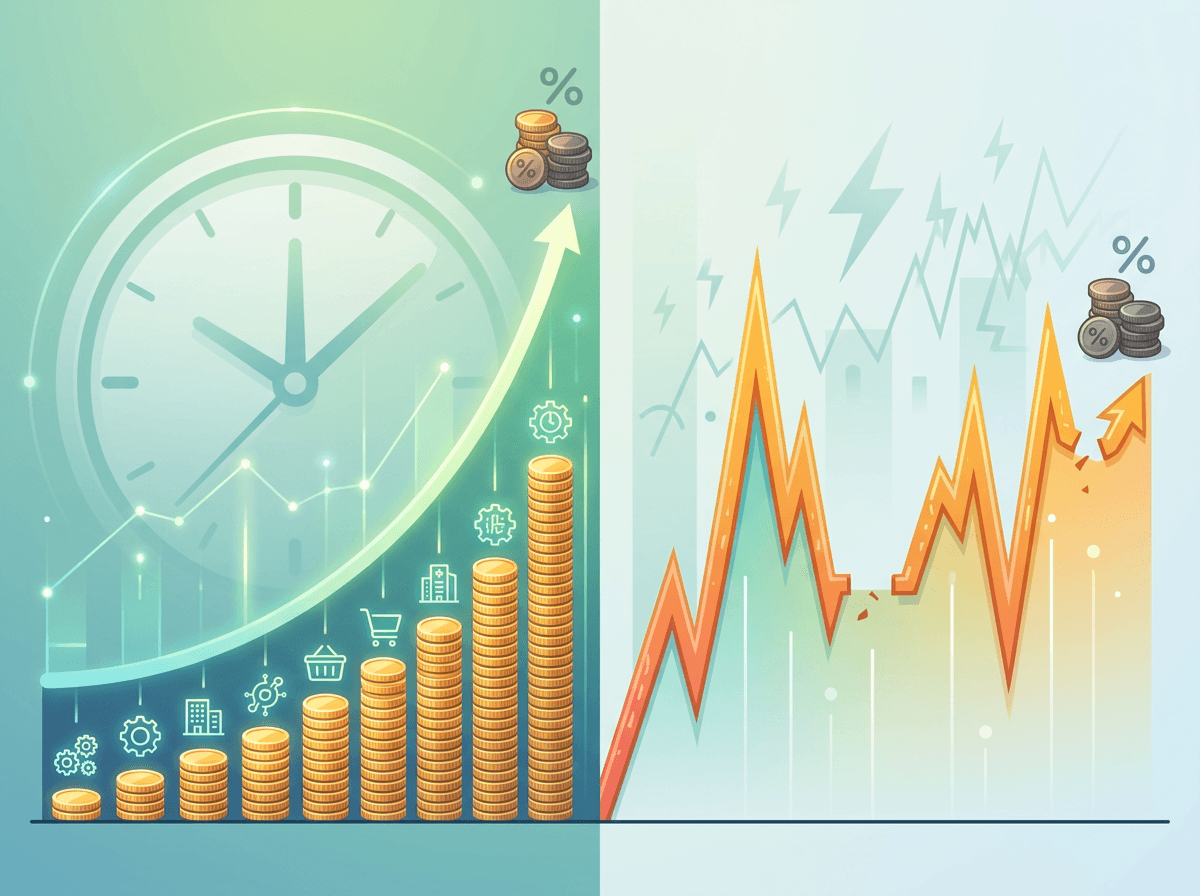
Public stocks feel less “real” than a house, but the value driver is clearer: profits and cash flows that can grow, and a share count that usually doesn’t. The hard part is that the market reprices those expectations constantly, so the path is lumpy even when the businesses are fine.
Most timing plans die on frictions that look small in isolation: missing a handful of strong days after selling “until things calm down,” paying short-term capital gains after a quick trade, or letting cash sit for months because reentry feels risky. Meanwhile, a diversified basket of companies quietly compounds through reinvested earnings, buybacks, and dividends, even when headlines make it feel irresponsible to hold.
The constraint to respect is concentration. A single stock can be a great company and still be a brutal investment if you overpay or a new competitor changes the math. Index funds reduce that risk, but they don’t remove the need to stomach drawdowns without needing the money next year.
Collectibles look simple until storage becomes the price
That’s why collectibles can feel like an easy shortcut: a watch, a card, a piece of art—something you can touch, enjoy, and “always sell later.” The value driver is usually thinner than people think. It’s not utility; it’s scarcity plus a resale market that stays deep enough to support pricing when you actually need out.
The carry cost is where returns quietly break. Climate-controlled storage, insurance riders, security, shipping, grading/authentication, and routine maintenance (think humidity, light, oils, scratches) aren’t one-time expenses. Miss one detail and the asset can become “fine for the wall” but discounted in a serious sale, which is the difference between a gain and a round-trip loss after fees.
Then the exit hits: auction commissions, dealer spreads, payment risk, and timing risk. If the category cools for a year or two, you can own something that “appreciates over decades” but still sells at a bad price when liquidity matters.
Skills and credentials that raise earning power

Some purchases don’t resell well, but still “appreciate” because they lift future cash flow. A license, a technical cert, or a degree can widen the set of jobs you can realistically take, and that shows up as higher pay, better benefits, or steadier hours. The value isn’t the credential itself; it’s the bargaining power it creates when you switch roles or negotiate a raise.
The friction is that the bill isn’t just tuition. There’s exam fees, prep time, and often a real hit to evenings or weekends, which is a cost if it crowds out overtime, client work, or family capacity. Some programs also lock you into a timeline: miss a test window, lose reimbursement, or burn months waiting for the next cohort.
The risk is mismatch. If the credential only matters at your current employer, the payoff can vanish after a reorg. The cleaner bet is the one that travels: skills that multiple firms pay for, even in a slower hiring year.
Intellectual property: value grows when distribution does
Intellectual property is one of the few assets where the upside can be non-linear: one piece of work can earn repeatedly if it keeps getting put in front of new buyers. A book, a course, a software library, a design, or a catalog of photos doesn’t “wear out” the way a physical asset does; the value comes from enforceable rights plus a distribution channel that keeps sending demand to it.
That distribution is the real constraint. If traffic depends on a single platform, an algorithm change, a policy shift, or a new competitor can flatten revenue without warning. Even when sales hold up, the unit economics can move against you through higher ad costs, rising affiliate cuts, or payment processing and refund friction.
Ownership also comes with enforcement and paperwork. Registering rights, policing infringement, negotiating licenses, and collecting royalties can be expensive and slow, and a “good year” can be followed by a quiet one if a key contract isn’t renewed on time.
Hard assets as insurance, not constant winners
Some hard assets earn their keep by failing quietly. Gold, TIPS-like cash substitutes, even a modest amount of cash at home in a power-outage region—none of these are exciting in strong markets, and that’s the point. They’re there for the stretch where inflation bites, banks tighten credit, or a layoff turns “long-term” into “sell something this quarter.” The constraint is opportunity cost: a few flat years can feel like you’re falling behind, right up until the month it stops being optional.
The mistake is treating them like a growth engine. Physical metals have spreads, storage, and insurance; commodity-linked plays can underperform for long cycles; “safe” assets can still drop when real yields rise. If you size them as a hedge instead of a thesis, you’re less tempted to buy at panic prices or dump them after a boring run.
A useful test is personal, not macro: what scenario would actually hurt your household balance sheet, and what asset would still be liquid then? If the answer is “I just need a buffer so I don’t sell stocks after a drawdown,” a boring ladder of cash and short-duration bonds may do more than a vault purchase.