You don’t have to pick the “perfect” option to get help today
When you feel wrung out, the hardest part is often the menu: therapy, meds, coaching, groups, apps, EAP, hotlines. You can lose an hour comparing options and still feel stuck, because every choice feels like it needs to be “right” to count.
Most of the time, you don’t need the perfect match to get relief today—you need a first step that is safe and easy to repeat. A short call with your doctor, one session with a therapist, or a peer group meeting can all be “good enough” starts.
What are you dealing with right now—stress, burnout, or something urgent?

“Best for what’s happening right now” starts with a quick sort. In a rough week, stress, burnout, and urgent risk can feel the same because they all wreck sleep, focus, and patience. But they don’t need the same kind of help.
If it’s mostly stress, you can still do your basics—work, care tasks, eating, hygiene—and your main goal is short-term relief. Burnout looks more like your capacity has dropped: simple tasks feel heavy, you’re numb or cynical, and rest doesn’t “reset” you after a weekend. That usually calls for fewer demands plus structured support, not just more coping tips.
If you might hurt yourself, you can’t stay safe, you’re using substances to get through the day, or you’re losing touch with reality, skip optimization and get immediate help. It can mean long waits and awkward phone calls, but it’s the right level of response.
If you only have energy for one thing, what’s the smallest helpful move?
Once you’ve picked the right level of response, the next problem is energy. On a low-capacity day, big plans (“find a therapist,” “fix my sleep,” “start exercise”) can collapse, and then you do nothing. The smallest helpful move is the one that reduces risk or friction in the next 24 hours.
If you’re not in urgent danger, choose one: send a single message to one provider, ask your primary care office for a mental-health appointment, or attend one drop-in support group. If your day is already sliding, use a fast safety step: tell one person you trust you’re not doing okay, remove easy access to anything you could use to hurt yourself, and save one crisis number in your phone.
Therapy, coaching, meds, groups, apps—what each is actually for (and not for)
Matching the tool to the job usually looks like this: you pick one option that can start working soon, and one option that can hold you over if the first takes time. Therapy is best when you need a private space to unpack patterns, grief, anxiety, or relationship stress with someone trained to spot risk. It’s not ideal for “I need relief by tonight,” and it can stall if you can’t meet regularly or you’re too exhausted to do any follow-up between sessions.
Coaching fits when you’re mostly stable but stuck—habits, confidence, work boundaries, decisions. It’s not designed for trauma treatment, severe depression, or anything with safety risk, and training standards vary. Medication is a useful lever when symptoms are persistent and physical—sleep, panic, appetite, agitation, low mood that won’t lift. It won’t teach coping skills, and it can take weeks plus dose changes to land well.
Groups work when you need belonging, perspective, and repetition; apps work when you need structure, reminders, and quick skills. Neither replaces clinical care when things are escalating, which is where cost and access start steering the decision.
When cost, waitlists, or time are the real problem
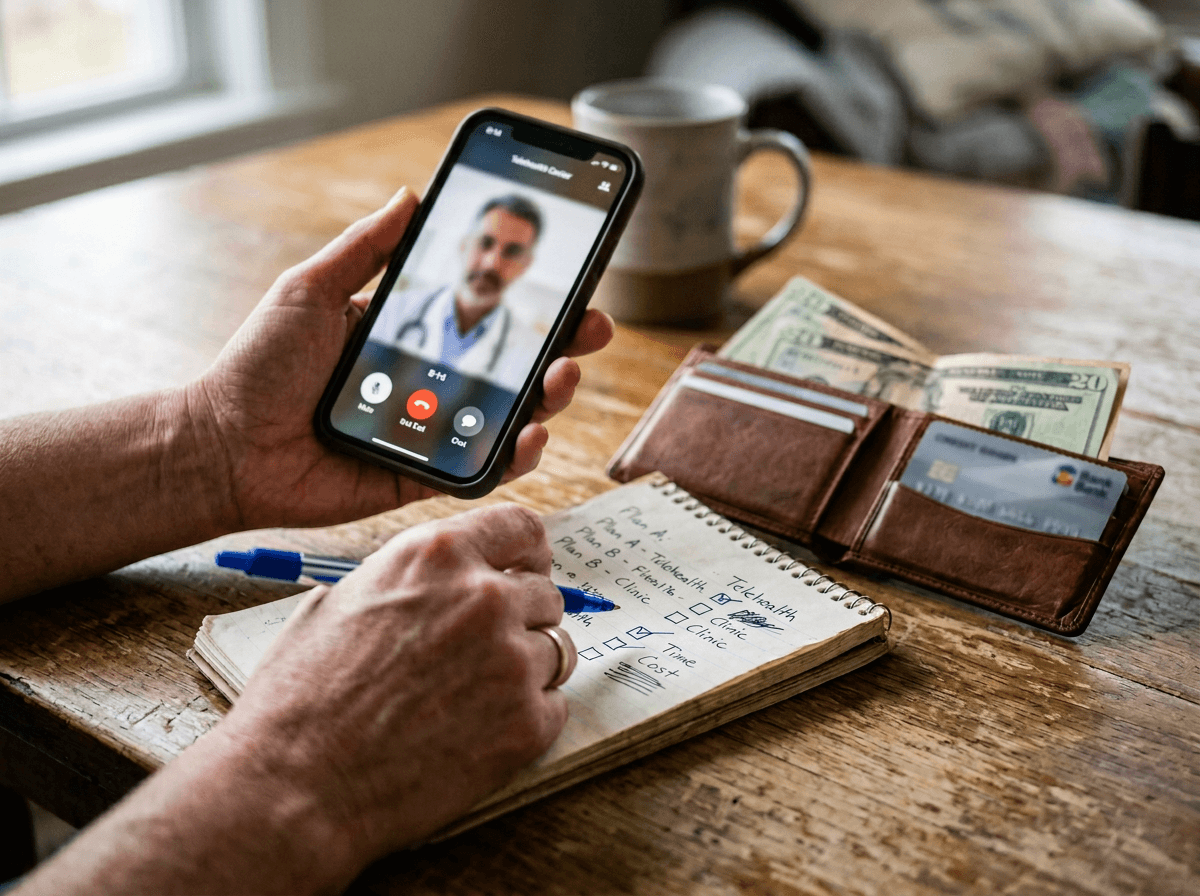
When therapy is booked out or the price makes you wince, most people either keep searching (and burn out) or give up. A better move is to separate “something I can start this week” from “the longer-term option I’m waiting for.” If you’re on a waitlist, book one concrete bridge: a primary care visit to discuss sleep/anxiety/depression, an EAP session, or a drop-in group. These don’t solve everything, but they reduce risk and keep you from white-knuckling it alone.
If money is the blocker, ask about sliding scale, interns/supervised clinicians, or telehealth providers outside your immediate zip code. If time is the blocker, look for formats that compress effort: one focused consult, a short skills group, or async messaging through a clinic or app. The limitation is real—cheap and fast often means less continuity or less privacy.
Before you commit, do a quick safety check: who’s providing it, what they’re trained to handle, and what happens if you get worse.
How do you tell if an option is safe and legit before you commit?
Before you commit, most people do the same thing: skim a website, look for reviews, and hope the vibe means it’s trustworthy. That’s risky, because a polished pitch doesn’t tell you who’s actually responsible for your care when you’re struggling.
Start with the provider’s identity and scope. If it’s therapy or medication, you should be able to find a real name, a state license (and license number), and a clear service type (therapy, psychiatry, primary care). If it’s coaching or a group, look for plain statements about training, what issues they do and don’t take, and how they handle safety concerns.
Then check the exit ramps: how you reach them between sessions, what they do if you mention self-harm, and whether they can refer you up a level. Verification takes time when you’re already tired, so keep the checklist short and use it to rule out bad fits fast.
Two weeks in: how to know if it’s helping—or if you should switch
Ruling out bad fits fast matters even more once you’ve started, because two weeks can disappear in a blur of “maybe it’s working?” Use a simple check: did anything get a little easier to repeat—sleep routine, fewer spirals, one hard conversation, showing up to work with less dread? Small wins count if they stack.
If nothing is shifting, look at the mechanism, not your motivation. Are you meeting often enough to build momentum (weekly beats “whenever”)? Is the format doing the job (skills vs deep processing, meds follow-up vs talk-only)? A common snag is logistics: missed sessions, inconsistent practice, or a plan that’s too big for your current energy.
Switch sooner if you feel judged, boundaries are unclear, safety concerns are brushed off, or symptoms are getting riskier (more substance use, self-harm thoughts, inability to function). Keep one “if I get worse” plan ready for the days this turns urgent.
Keep a simple escalation plan for worse days
Those “turns urgent” days often show up fast: you miss sleep for two nights, stop replying to people, or start thinking about ways to escape. Don’t make yourself decide from scratch in that state. Write a two-step escalation plan when you’re calmer and keep it where you’ll see it (notes app, fridge).
Step 1 is “same day support”: text or call one trusted person, message your provider, or use an EAP/crisis line for a live conversation. Step 2 is “immediate safety”: if you can’t stay safe or you’re thinking about harming yourself, call 988 in the U.S., go to the ER, or call 911.
Remove obvious means, and ask someone to stay with you until the wave passes.