You’re considering CBT, but you don’t want “positive thinking”
You can be desperate for relief and still recoil at anything that sounds like “tell yourself you look fine.” With BDD, the problem usually isn’t a shortage of compliments. It’s how quickly your attention locks onto a feature, how certain it feels, and how hard it is to stop checking, fixing, or avoiding once that loop starts.
CBT for BDD doesn’t try to argue you into liking your appearance. It focuses on the habits that keep the distress running—mirror rituals, comparison, reassurance seeking, camouflage, mental reviewing—so your day stops revolving around “figuring it out.”
That can still cost time, money, and discomfort, especially when you test new behaviors instead of the safe ones. The key is knowing what, specifically, therapy is trying to change.
So what exactly is CBT for BDD trying to change?
That “specifically” usually shows up in ordinary moments: you catch your reflection, your mind starts measuring, and you feel pushed to do something right now—zoom in, hide, ask someone, cancel plans. CBT for BDD tries to change that chain. Not by declaring the thought “wrong,” but by loosening the rules that say the thought must be solved before you can live your day.
In practice, it targets two things: the meaning you give the thought (“If my nose looks uneven, people will stare”) and the moves you make to reduce the feeling (checking, photos, grooming, comparing, reassurance, avoidance). If the moves work short-term, they get repeated, and the thought hits harder next time.
At first, doing fewer rituals can spike anxiety and make you feel less “in control.” That’s often the point—learning you can tolerate the uncertainty without paying for it all day.
What the first few sessions usually look like (before anything scary happens)
That “uncertainty without paying for it all day” usually starts in fairly un-dramatic ways. In the first few sessions, you’ll often map your BDD loop in detail: what sets it off (lighting, photos, a comment), what you do next (mirrors, grooming, asking, avoiding), and what it costs you in time, money, and missed plans.
You and the therapist typically pick one or two concrete targets to track between sessions—like “no rechecking after I leave the bathroom” or “no asking my partner if my skin looks bad.” Expect a simple log: trigger, urge, what you did, how long it took to come down. It’s not busywork; it’s how you spot patterns you currently experience as “just the truth.”
Sessions can feel too slow when you’re suffering, and too personal when you’re asked for specifics. Clarity comes first, because the harder steps only work when you know exactly what you’re changing.
When therapy asks you to do the opposite of what feels safe
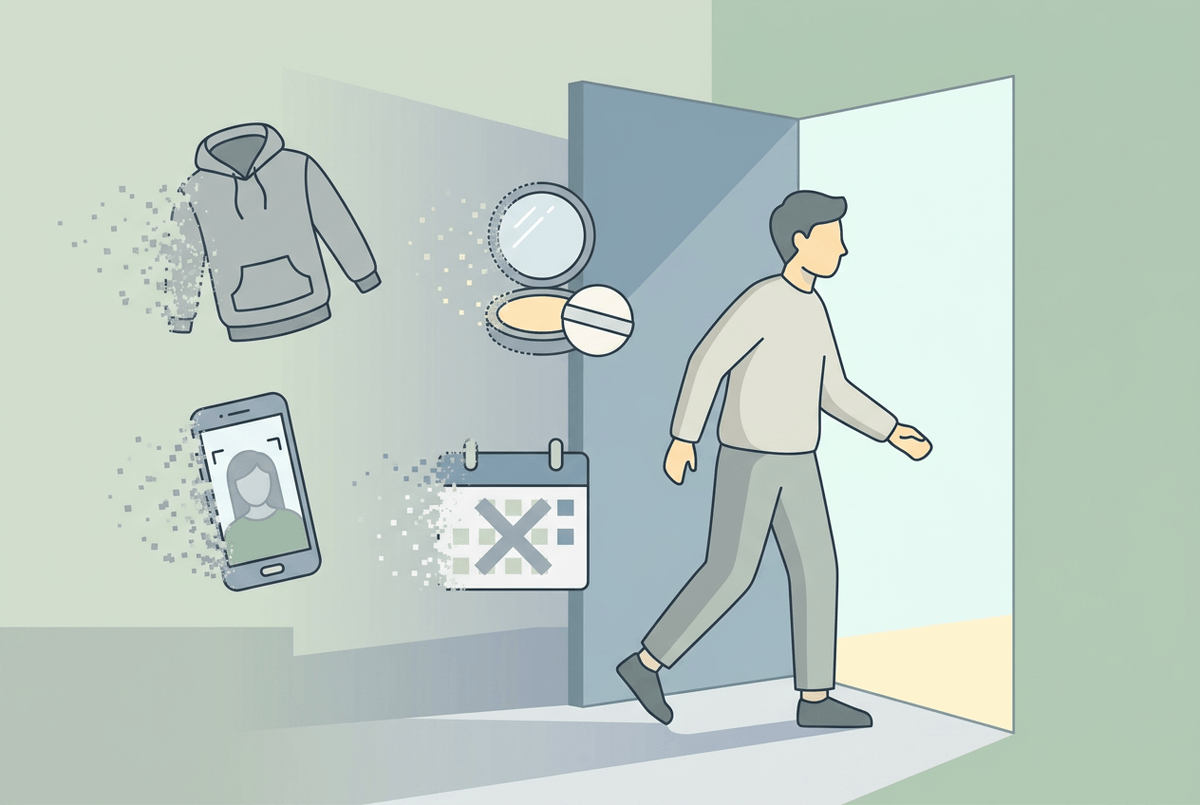
Once you know exactly what you’re changing, the plan can sound backwards. If mirrors, makeup, hoodies, angles, and cancellations have been keeping you afloat, therapy may ask you to loosen them on purpose. Not all at once, but enough that you can test a different rule: “I can feel exposed and still do the thing I was going to do.”
That often looks like reducing “safety moves” before you face a trigger. If you usually take 30 photos, you might take none. If you usually check under bright light, you might leave the bathroom after one quick, timed check. If you usually ask for reassurance, you might practice letting the question sit unanswered.
This is where it can feel expensive in a new way: anxiety can spike, and you may worry you’re being reckless. A good therapist will set a clear, doable step and review what happened, so you’re not just white-knuckling through the week. The next challenge is choosing exposures that fit BDD’s specific traps—mirrors, photos, and social situations.
Mirror work, photos, and social situations: how exposures are tailored to BDD
That “fit” usually looks like the things you already wrestle with: mirrors, cameras, and being seen. Exposures for BDD aren’t about proving you look good. They’re about practicing a new response while the old alarm is running—seeing your reflection without zooming in, being in a photo without retaking it, going out without extra camouflage or last-minute cancellations.
Mirror work is often structured and time-limited. You might do a brief, whole-face scan at a set distance, then leave—no leaning in, no “fixing,” no checking from new angles. With photos, a therapist may have you take one picture and stop, or look at a normal photo for a short period without editing, comparing, or asking someone what they see.
Social exposures get tailored to the exact “rules” you follow, like only speaking in dim light or avoiding eye contact so people won’t look at your face. These exercises can bump into work, dating, and real-world grooming expectations, so you’ll plan steps that are uncomfortable but still doable.
How you’ll know it’s working—if you still don’t ‘feel attractive’
Those “doable but uncomfortable” steps can leave you wondering what counts as progress if you still look in the mirror and feel bad. In CBT for BDD, improvement often shows up as time and freedom before it shows up as confidence. You may still get the same thought (“My skin looks awful”), but it stops hijacking the next hour.
A few practical signs: you check once and leave instead of circling back; you go to work or see friends without “fixing” until it feels perfect; you can sit with a photo without zooming, deleting, or asking someone to confirm what they see. The distress may still spike, but it drops faster, and you spend less money and energy on products, procedures, or elaborate routines.
You might not “feel attractive” for a while, because therapy isn’t training a new opinion—it’s breaking a rule that says you must reach certainty before you can live. If sessions aren’t changing what you do between triggers, it’s a signal to adjust the plan, not a verdict on you.
If CBT isn’t enough on its own: common reasons and what changes next

If sessions aren’t changing what you do between triggers, there are a few common reasons—and most are fixable. Sometimes the targets are too vague (“check less”), so the week fills up with small rituals that never get counted. Sometimes exposures stay “safe,” like practicing only at home, so the real problem (work, dating, photos with friends) never gets tested.
Another reason is hidden reinforcement: family or partners answer reassurance questions, help you avoid, or adjust lighting and photos to keep the peace. Money and time can also block progress if you’re juggling long commutes, high session costs, or a therapist who isn’t trained in BDD-specific CBT.
What changes next is usually concrete: tighten the plan (specific response prevention rules), raise the exposure difficulty in small steps, add relapse planning, and consider adding medication (often an SSRI) alongside CBT when symptoms stay intense. The next step is choosing a provider who can do that on purpose.
Choosing a provider and walking into intake with the right questions
Choosing a provider who can “do that on purpose” often comes down to whether they’ve treated BDD specifically, not just anxiety in general. At intake, ask: “How do you do CBT for BDD—do you use exposure and response prevention, and how do you handle mirror and photo rituals?” and “How will we measure progress week to week—minutes checking, avoided events, reassurance questions?”
Also ask what happens if you get stuck: “When would you adjust the plan or suggest medication?” Practical constraints matter: out-of-network costs, weekly scheduling, and doing exposures in real life (workdays, dates, family events). If a therapist keeps turning sessions into reassurance about your looks, or avoids behavior change because it’s “too upsetting,” keep looking.